The Basement Doctor of Central Kentucky Before & After Photos
Click on a photo to enlarge.
Crawl Space Repair in Strunk, Kentucky
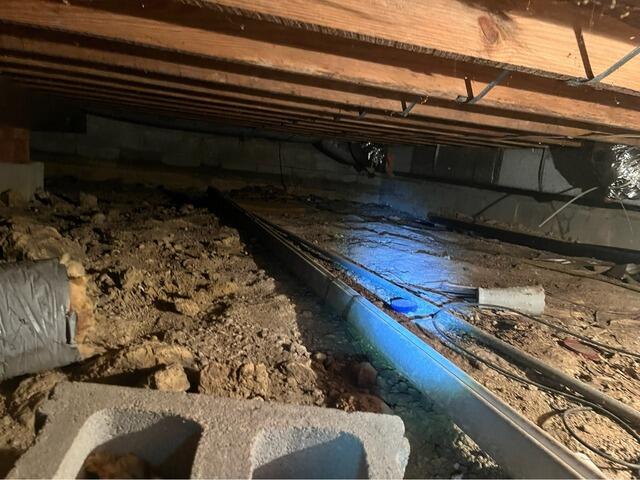
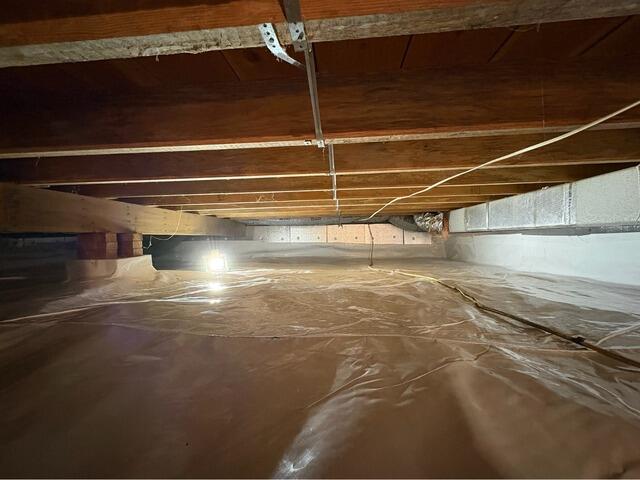
This crawl space in Strunk, Kentucky, was struggling to handle moisture. The floor joists started to show signs of early stage moisture damage, the space emitted musty smells into the upper levels of the home, and the unconditioned space was making it hard to heat and cool the rest of the home. We encapsulated the space underneath by wrapping the dirt floor, the block walls, and the concrete columns with our CleanSpace vapor barrier. Our CleanSpace vapor barrier is similar to a pool liner, and it is composed of antimicrobial material. This encapsulation system will keep the space beneath this home safe for decades to come.
Basement Waterproofing and Foundation Repair Contractor in Cynthiana, Kentucky


As a result from all the hydrostatic pressure this basement foundation was receiving, the walls were bowing in and leaking water. In the before picture you can see the chipped paint, cracks, bowing, and the pool of water on the floor. In the after picture you can see PowerBraces holding the bowing walls up, CleanSpace walls covering the once dirty wall, fresh concrete over the hidden WaterGuard drains all around the perimeter of the basement, and a TripleSafe sump pump all the way in the corner.
Concrete Front Porch Repair in Cynthiana, Kentucky


The existing front porch for this home in Cynthiana was all bent out of shape. Large gaps revealed themselves throughout the driveway and front porch, which is a cause for concern. Large gaps not only look bad, they can decrease the lifetime of your slabs. That's why we leveled these slabs out with our PolyLevel foam, and then sealed them with our sealant. The result was a happy homeowner!
Crawl Space Repair in Cynthiana, KY
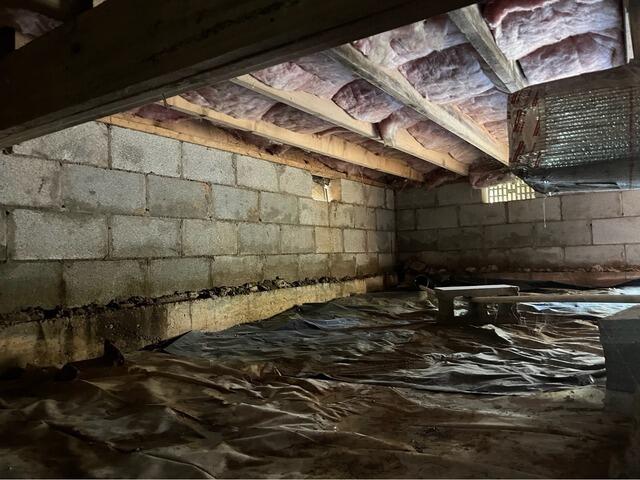
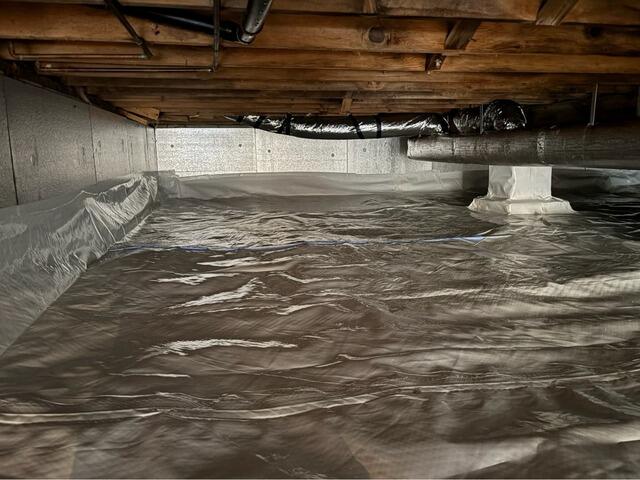
This crawl space in Cynthiana, KY, was wet, humid, and musty before we transformed it with an encapsulation system. We started by ripping out all the fiberglass insulation in the ceiling and hauling it away to our truck. Next, we installed our SilverGlo insulation around the walls of the crawl space to keep the space warm during the colder times of the year. Lastly, we sealed the entire space from the ground by wrapping our 20 mil CleanSpace vapor barrier across the floor, around the columns, and up the walls of the space. Unseen in the photos, we also installed our dehumidifier to keep the trapped air in the space dry as well.
Crawl Space Repair Company in Richmond, Kentucky


This before and after highlights why traditional vented crawl spaces often fall short. Many homes are built with wall vents, a thin plastic sheet over the gravel, and fiberglass insulation between the joists—methods that meet code but don’t always address real moisture concerns. In most climates, vented crawl spaces allow humidity to build up, leading to musty air and long-term damage. By encapsulating the space, as shown here, we’re able to control moisture, improve air quality, and protect the home’s structure for years to come. The silver insulation panels along the walls also replace ceiling fiberglass, creating a cleaner, more efficient solution.
our service area
We serve the following areas
- Albany
- Bagdad
- Bethlehem
- Bradfordsville
- Breeding
- Burkesville
- Campbellsburg
- Campbellsville
- Carrollton
- Columbia
- Dunnville
- Elk Horn
- Eminence
- Finchville
- Fountain Run
- Gamaliel
- Ghent
- Glens Fork
- Gradyville
- Gravel Switch
- Greensburg
- Hestand
- Jamestown
- Knifley
- Lebanon
- Loretto
- Mackville
- Mount Eden
- Mount Hermon
- New Castle
- Pendleton
- Perry Park
- Pleasureville
- Port Royal
- Raywick
- Saint Catharine
- Saint Francis
- Saint Mary
- Sanders
- Shelbyville
- Simpsonville
- Smithfield
- Springfield
- Sulphur
- Taylorsville
- Tompkinsville
- Turners Station
- Waddy
- Willisburg
- Worthville