The Basement Doctor of Central Kentucky Before & After Photos
Click on a photo to enlarge.
Crawl Space Repair Company in Liberty, Kentucky


This graveled floor crawl space in Liberty, KY was in need of an encapsulation to keep moisture out. we installed 800 square feet of our drainage matting and CleanSpace vapor barrier, our SmartSump sump pump with a battery back up, our SaniDry Sedona dehumidifier, and our SilverGlo wall insulation. All of these products will keep this crawl space dry, clean, well insulated, and healthy. The homeowners almost immediately noticed healthier breathing air after the job was completed.
Drive Way and Side Walk Lift and Seal in Frankfort, KY
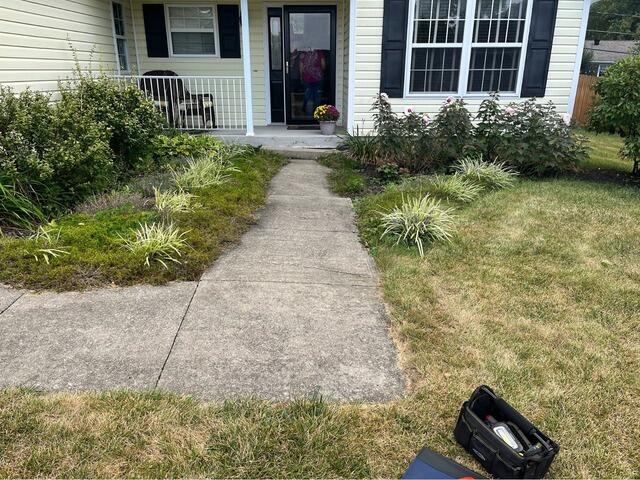
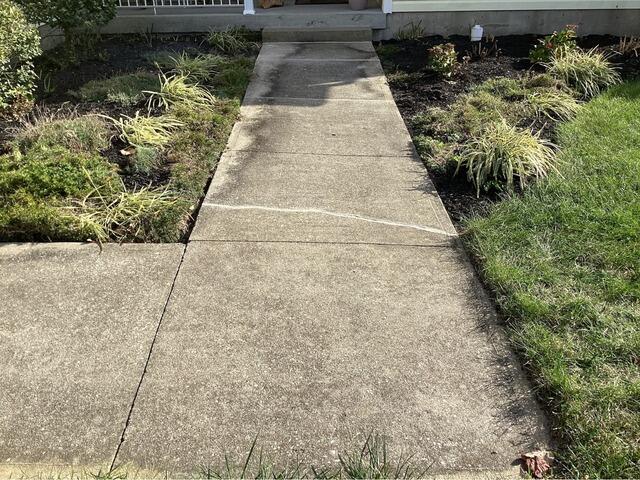
This home's pretty side walk and drive way were becoming old and contained large gaps and cracks, something we aimed to fix. We were able to PolyLevel lift specific parts of the concrete to raise all the slabs to be on the same level. We then sealed the gaps with NexusPro sealant. These concrete slabs are repaired and protected now.
Porch Foundation Leveling in Frankfort, Kentucky


This front porch in Frankfort, KY, had settled pretty far down into the soil, which made for an awkward entrance to the front door. Far more problematic though, the settling was causing severe damages to the roof overhang system above. The columns, which connected the porch slab to the roof overhang were sinking with the porch. To fix this, we underpinned the porch with our helical piers to not just stabilize the structure, but to raise it back up as well. The piers were driven deep below the porch vertically, and they were concealed with backfill afterwards. The piers also allowed us to lift this heavy structure, which helped level out the slab and close some gaps and cracks in the overhang above. Afterwards, the homeowner no longer has to worry about their roof toppling down due to sinking support columns.
Bowing Wall Repair in Frankfort, KY
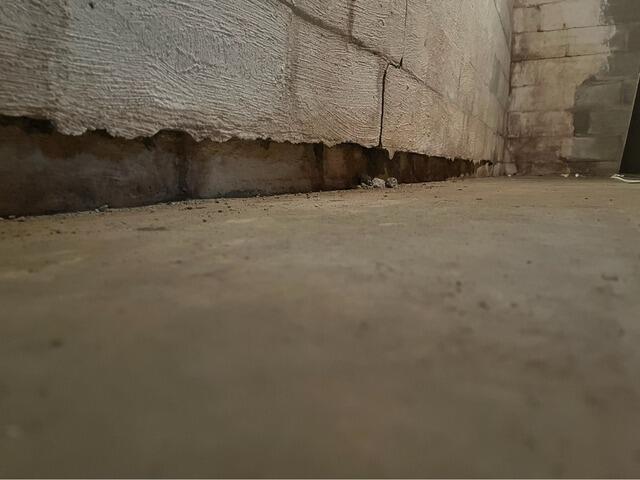
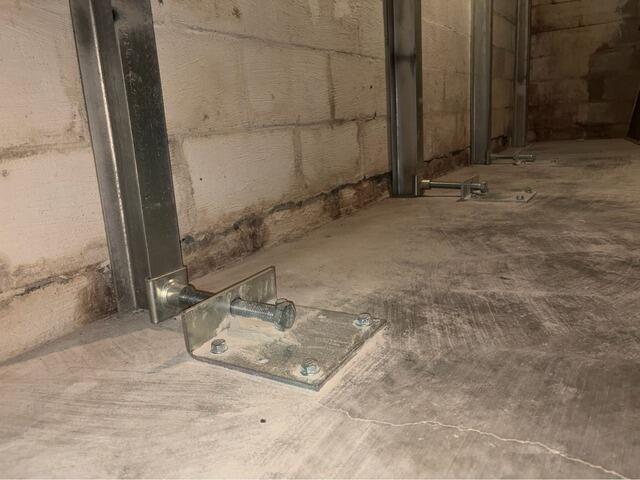
This photo set taken from a basement shows the transformation of a bowing wall repair project in Frankfort, KY. The before photo highlights the shearing symptom, which happens in late stage of wall failure, and is super dangerous. Shearing occurs when there is so much external pressure that the wall slowly starts to slide inwards, right over the floor slab. This wall was at a very high risk for complete structural failure. After we repaired the wall with a bracing system, we were able to push the wall back to a plum position. In fact, our crew was able to push the wall back 3 inches far. This repair process was very delicate, but our crew was able to handle the pressure. If you wish to read more about this project, we have a case study that you can read by clicking here.
Crawl Space Moisture Issues in Frankfort, KY
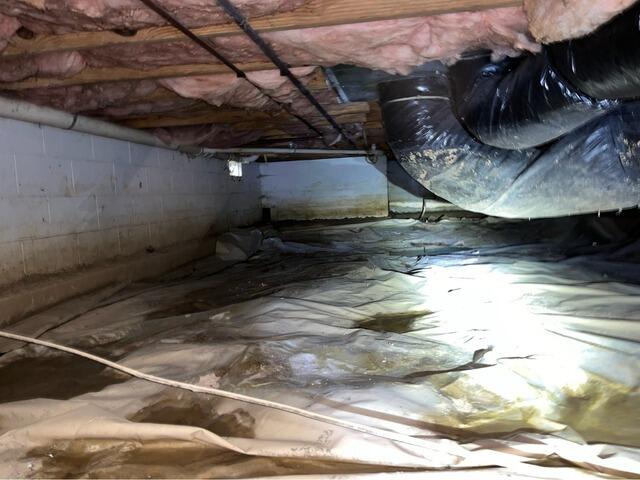
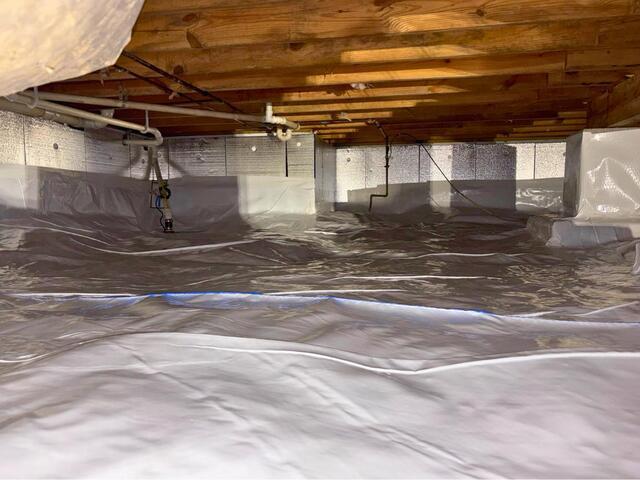
This crawl space in Frankfort, KY, was struggling to keep moisture out. We encapsulated the space to completely change the look and feel of the space for the future. We started by ripping out the old fiberglass insulation in the floor joists and the thin plastic liner on the floor. We then installed our waterproofing system, which consists of our perforated drainage tile and our SmartSump sump pump. Next, we wrapped the walls with our SilverGlo insulation to keep the space warm in the winter. Lastly, we wrapped the space with our 20 mil CleanSpace vapor barrier and we installed our SaniDry Sedona dehumidifier to keep moisture completely away.
our service area
We serve the following areas
- Albany
- Bagdad
- Bethlehem
- Bradfordsville
- Breeding
- Burkesville
- Campbellsburg
- Campbellsville
- Carrollton
- Columbia
- Dunnville
- Elk Horn
- Eminence
- Finchville
- Fountain Run
- Gamaliel
- Ghent
- Glens Fork
- Gradyville
- Gravel Switch
- Greensburg
- Hestand
- Jamestown
- Knifley
- Lebanon
- Loretto
- Mackville
- Mount Eden
- Mount Hermon
- New Castle
- Pendleton
- Perry Park
- Pleasureville
- Port Royal
- Raywick
- Saint Catharine
- Saint Francis
- Saint Mary
- Sanders
- Shelbyville
- Simpsonville
- Smithfield
- Springfield
- Sulphur
- Taylorsville
- Tompkinsville
- Turners Station
- Waddy
- Willisburg
- Worthville